

Introduction
Polysomnography
Comprehensive sleep study at the EEG Laboratory in Milanówek
If you struggle with insomnia, snoring, or other sleep-related issues, polysomnography can help iden-tify their cause and determine appropriate treatment. We understand that you may feel anxious about this examination—we want to reassure you: it is completely safe, non-invasive, and our staff will en-sure your full comfort.
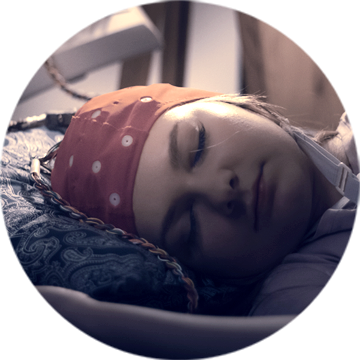
Polysomnography is the most accurate and comprehensive sleep study available in modern medicine. It is considered the “gold standard” in diagnosing sleep disorders such as insomnia, sleep-disordered breathing (e.g., sleep apnea), and other issues related to nighttime rest. In our EEG Laboratory in Mi-lanówek, we offer a full, classic nocturnal polysomnography (lasting approximately 8 hours) utilizing advanced sensors that monitor all key bodily functions during sleep
Polysomnography
What is
polysomnography?
Polysomnography is an advanced diagnostic test that allows for the simultaneous recording of many physiological parameters occurring in the body during natural sleep. The name comes from the Latin word somnus, meaning sleep. This study allows doctors to accurately assess sleep quality, establish the causes of insomnia or difficulty falling asleep, detect breathing disorders during sleep, and dia-gnose a wide range of other sleep-related health problems.
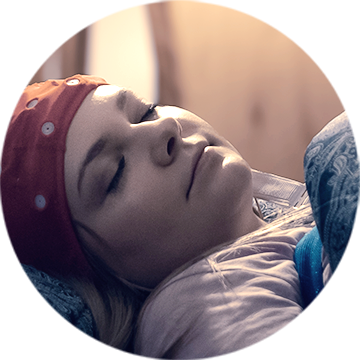
During a full polysomnography, multiple key vital parameters are monitored simultaneously. During the study, we record:
- EEG (electroencephalography) – brain electrical activity, which allows for the analysis of sleep stages (NREM and REM).
- ECG (electrocardiography) – heart function and potential rhythm disturbances.
- EOG (electrooculography) – eye movements, which help identify the REM stage when eyes move intensely.
- EMG (electromyography) – muscle tension (e.g., chin and leg muscles), enabling the detection of restless legs syndrome or excessive motor activity.
- Pulse oximetry and airflow – blood oxygen saturation via a finger sensor and airflow through the nose and mouth (nasal cannula/thermistor) to monitor breathing.
- Respiratory effort, body position, and sounds – movements of the chest and abdomen (respi-ratory belts) during breathing, body position during sleep, and recordings of snoring and other nocturnal sounds via a microphone.
Polysomnography
Indications for
polysomnography
Polysomnography is recommended in a wide spectrum of clinical situations related to sleep. Below are the most common indications for performing this study:
1. Sleep Apnea Diagnosis Sleep apnea (both obstructive, caused by mechanical closure of the upper airways, and central, resulting from disorders in the brain’s respiratory center) is the most common indication for polysomnography. The study allows for the precise determination of the type (OSA or CSA), severity, and characteristics of apnea episodes. We record parameters including the lowest blood saturation level, the duration of individual apneas, and their relationship to body position and sleep stages, which is essential for selecting the optimal therapeutic strategy.
Common symptoms suggesting the need for polysomnography when sleep apnea is suspected:
Loud, irregular snoring with breathing pauses (observed, for example, by a partner).
Excessive nighttime sweating.
Frequent waking with a feeling of breathlessness (nocturnal “choking” episodes).
Excessive daytime sleepiness and chronic fatigue despite seemingly sufficient sleep time.
Difficulty concentrating and memory problems.
Morning headaches and a dry mouth upon waking
2. Diagnosis of Central Hypersomnias Central hypersomnias are a group of less common neurological disorders characterized by excessive daytime sleepiness not related to sleep-disordered breathing. This group includes narcolepsy, Kleine-Levin syndrome, and idiopathic central hypersomnia. Noctur-nal polysomnography, combined with a subsequent daytime MSLT (Multiple Sleep Latency Test), al-lows for an objective assessment of how quickly a patient falls asleep during the day and whether sudden REM sleep episodes occur immediately after falling asleep (characteristic of narcolepsy). The study also helps distinguish primary hypersomnias (neurological) from secondary ones caused by me-dications, depression, or other medical conditions. Furthermore, it assesses sleep architecture for fragmentation (frequent awakenings), which can also cause excessive daytime sleepiness.
3. Differentiating Parasomnias and Seizures Parasomnias are a group of disorders involving abnor-mal or undesirable behaviors during sleep or upon waking. They are not caused by epileptic seizures, although symptoms can sometimes appear similar. The most well-known parasomnias include som-nambulism (sleepwalking), night terrors, and confusional arousals. Polysomnography with simulta-neous video recording allows for a detailed analysis of these episodes. Unlike epileptic seizures, para-somnias do not show characteristic EEG changes or a preceding “aura,” and these incidents often oc-cur at consistent times of the night according to the natural sleep cycle. The study can also help de-tect triggers for parasomnias, such as sleep fragmentation caused by sleep apnea.
4. Diagnosis of Sleep-Related Movement Disorders These include Restless Legs Syndrome (RLS), Periodic Limb Movement Disorder (PLMS), and other abnormal motor activities. Polysomnography re-cords the characteristic patterns of these movements. For example, in PLMS, the legs perform repe-titive movements lasting several seconds, occurring in series every few dozen seconds. Unlike seizu-res, these movements are predictable, are preceded by EEG changes, and are often accompanied by brief sleep-fragmenting micro-arousals. The study assesses how much these movements affect sleep quality and distinguishes primary movement disorders from secondary ones (caused by iron de-ficiency, kidney disease, or certain medications).
5. Treatment-Resistant Insomnia This is a state where conventional pharmacological and behavioral therapies do not bring expected improvement. Polysomnography may be recommended to detect hi-dden causes of sleep disturbances, such as unconscious micro-arousals caused by periodic limb movements, subclinical (mild) sleep apnea, or other previously unnoticed fragmentation disorders. The study provides an objective measurement of how much a patient actually sleeps and the quality of that sleep compared to the patient’s subjective perception. It often turns out that the patient sle-eps more than they think, but their sleep is significantly fragmented. It can also reveal “paradoxical insomnia,” where objective sleep parameters are relatively normal, but the patient feels chronic sleep deprivation—which requires a different, specialized therapeutic approach.
6. Sleep Bruxism Sleep bruxism is involuntary nighttime teeth grinding or clenching, which can lead to serious dental damage, headaches, and temporomandibular joint disorders. Polysomnography with simultaneous EMG recording of the jaw muscles allows for an accurate assessment of the frequency, severity, and duration of bruxism episodes. It also identifies which sleep stages these episodes occur in and if they are accompanied by micro-arousals. The study helps distinguish primary bruxism from secondary bruxism related to sleep apnea, RLS, certain medications (especially SSRI antide-pressants), or neurological disorders.
7. Night Groaning (Catathrenia) Catathrenia is a disorder involving long, drawn-out groans during exhalation while sleeping. These sounds can be very loud and significantly disturb a partner’s sleep. Unlike snoring (which occurs during inhalation), catathrenia groans occur during exhalation—mainly in the REM phase. Polysomnography with audio recording enables a detailed analysis of these sounds, determining their timing and differentiating catathrenia from other nocturnal vocalization disorders or seizures. The study is also important to check for co-occurring sleep apnea.
Polysomnography
The course of the study
Polysomnography requires a one-day hospitalization or stay at our specialized sleep lab—you spend the night in a comfortable room under the care of a technician. You should arrive at the facility in the evening, usually about 1.5 hours before your planned bedtime, to allow for calm preparation. Initially, we conduct a detailed medical interview and ask you to fill out questionnaires regarding sleep habits, medications, and symptoms.
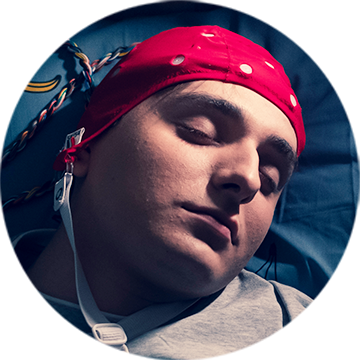
Next, qualified personnel attach the electrodes and sensors. The setup process takes about 30–45 minutes. EEG electrodes are placed on the scalp according to a standard 10–20 system to record brain activity. Two small EOG electrodes are placed near the eyes to monitor eye movements, and EMG electrodes are placed on the chin and sometimes the legs to measure muscle tension.
ECG electrodes are attached to the chest to monitor the heart. Elastic belts are placed on the chest and abdomen to measure respiratory movements. Small sensors (nasal cannula or thermistor) are pla-ced near the nose and mouth to monitor airflow. A pulse oximeter clip is placed on a finger to measure blood oxygen levels. A sensitive microphone is placed by the bed to record snoring and other sounds.
Despite being connected to these devices, you can freely change your body position in bed and even get up to use the bathroom—the wiring and equipment are designed to allow movement. A technician monitors the study from an adjacent room via monitors throughout the night. They can react quickly if a sensor becomes detached. Additionally, a video camera records your sleep to link sensor data with body movements or position changes. For reliable results, the sleep recording should last at least 6 hours (optimally around 8).
Polysomnography
Patient preparation
Proper preparation is key to reliable results. On the day of the study, we recommend:
- Avoid Stimulants: Do not drink coffee, strong tea, energy drinks, or alcohol. Alcohol is parti-cularly discouraged as it can worsen sleep-disordered breathing and distort results.
- Medications: Consult your doctor regarding medication use. Do not take sleeping pills, se-datives, or other nervous system-affecting drugs in the evening unless previously agreed upon with your treating physician. Inform our staff about all permanent medications (espe-cially psychotropic, antidepressant, sedative, or muscle-relaxing drugs).
- Natural Sleepiness: Try not to nap during the day and aim to be tired in the evening to facili-tate falling asleep in a new environment. Eat a light dinner, avoiding heavy meals just before bed.
- Physical Preparation: Men should be clean-shaven on the chin (mustaches may remain) to en-sure proper electrode contact. Women should remove nail polish, which can interfere with the pulse oximeter.
- Comfortable Clothing: Bring a comfortable, two-piece pajama (preferably buttoned at the front to facilitate chest electrode placement). You may also bring your own pillow and blanket for comfort.
- Other Items: Bring all necessary medications for the next day and basic toiletries.
Polysomnography
Benefits and diagnostic significance
Polysomnography provides invaluable diagnostic information that cannot be obtained through other methods. Most importantly, it identifies the type and severity of sleep-disordered breathing. This data is priceless for planning treatment—whether it be CPAP therapy, surgery, or lifestyle modifica-tions.
The study also enables the detection of coexisting disorders such as RLS, PLMS, parasomnias, and circadian rhythm disorders. For patients with epilepsy, it can capture nocturnal seizures that might otherwise go unnoticed.
Proper diagnosis and treatment of sleep disorders lead to significant health benefits. Untreated sleep apnea substantially increases the risk of hypertension, doubles the probability of a heart attack, and triples or quadruples the risk of stroke. It is also linked to type 2 diabetes, depression, cognitive impa-irment, and a higher risk of accidents due to sleep deprivation.

Polysomnography
Safety and
contraindications
Polysomnography is a completely safe and non-invasive study suitable for patients of all ages—from newborns to the elderly. There are no absolute contraindications.
The only relative obstacle may be claustrophobia in some patients due to the number of connected devices. If you have anxieties regarding the equipment, please inform us—our staff is trained in anxiety reduction techniques. As mentioned, you can still move freely and use the restroom.
Polysomnography is also safe for pregnant women. In children, the study requires special preparation and experienced staff but remains entirely safe and often essential for proper development.
Our sleep laboratory in Milanówek is fully equipped with state-of-the-art equipment and qualified staff who monitor patients throughout the night. We offer comprehensive sleep diagnostics for chil-dren and adults in comfortable, home-like conditions.
THE ABOVE STANDARDS ENSURE THE RELIABILITY AND EFFECTIVENESS OF THE STUDIES.

Price list
Our offer
To schedule an appointment at a convenient time for you
and to receive detailed information,
please contact us at:
+48 455 409 041

